HKUST Distinguished Civil and Environmental Engineering Workshop
Structural Sensing and Mechanics: From Theoretical Foundations to Innovative Solutions
Organizers: Prof. Shenghan Zhang, Prof. Tianju Xue, Prof. Jize Zhang
Incoming lectures
Former lectures
STOCHASTIC MECHANICS, GLOBAL RELIABILITY AND OPTIMIZATION OF COMPLEX STRUCTURES VIA PHYSICALLY DRIVEN PROBABILITY DENSITY EVOLUTION METHOD
Abstract
Full uncertainty quantification and propagation are the basis for the reliability evaluation of complex systems, while the damage and failure from materials to structures should also be incorporated. This leads to the major difficulty lying in the coupling of randomness and nonlinearity for real-world structures and systems, which are generally high-dimensional systems. Incorporating the underlying physics of the system and the principle of preservation of probability will lead to a physically driven full probabilistic uncertainty propagation method. Some new advances will be outlined, including: (1) The generalized density evolution equation and the dimension-reduced probability density evolution equation for high-dimensional nonlinear systems based on the principle of preservation of probability; (2) The effects of randomness of structural parameters observed from experimental studies; and (3) Global reliability and design optimization of structures in the context of uncertainty. Challenging problems to be studied further will also be discussed.
Extended readings
[1] Jie Li, Jianbing Chen. Stochastic Dynamics of Structures. John Wiley & Sons, 2009.
[2] Meng-Ze Lyu, Jian-Bing Chen*. A unified formalism of the GE-GDEE for generic continuous responses and first-passage reliability analysis of multi-dimensional nonlinear systems subjected to non-white-noise excitations. Structural Safety 98 (2022) 102233.
[3] Jianbing Chen, Meng-Ze Lyu, Shenghan Zhang. Dimension-reduced Chapman-Kolmogorov equation for high-dimensional stochastic dynamical systems. Computer Methods in Applied Mechanics and Engineering 448 (2026) 118433.
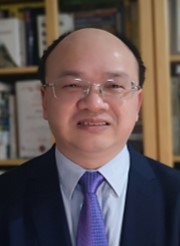
Reporter: Prof. Jianbing Chen
Time: 24/11/2025 (Monday), 11:00-12:00;
Location: Room 3598, Academic Building, HKUST
Host: Prof. Shenghan Zhang
Introduction of reporter:
Jianbing Chen is currently University Distinguished Professor of Tongji University in the College of Civil Engineering. He is the Academic Committee
member of Tongji University and vice director of the State Key Laboratory of
Disaster Reduction in Civil Engineering. Dr. Chen specializes in the area of
uncertainty quantification, stochastic mechanics and reliability, and published 4 books and over 210 journal papers. He received the Natural Science Award of China (2016), the IASSAR Early Achievement Award (2017), the National Science Fund for Distinguished Young Scholars (2017) and the Humboldt Research Award (2023). Prof. Chen now serves as the Chair of the Executive Board of the International Association for Structural Safety and Reliability (IASSAR), member of Board of Directors of the International Civil Engineering Risk and Reliability (CERRA), the Board member of the International Joint Committee on Structural Safety (JCSS) and reporter of WP1, and the vice President of Chinese Society for Vibration Engineering. He also serves as the Co-Editor-in-Chief of the journal Probabilistic Engineering Mechanics, and the associate editors of ASCE-ASME Journal of Uncertainty and Risk in Engineering Systems, Structure and Infrastructure Engineering, and Chinese Journal on Vibration Engineering and is in the editorial board of Structural Safety, and Reliability Engineering and System Safety, etc.
Structural Behavior, Design, Optimization, and Simulation of UHPC
Abstract
As the most consumed construction material, concrete contributes to 6-8% of global carbon emissions. Meanwhile, cracking, spalling, and steel corrosion challenge the resilience and durability of concrete structures. To address these challenges, ultra-high performance concrete (UHPC) materials have been developed. Relative to conventional concrete, UHPC shows superior mechanical performance, damage tolerance, and durability. While UHPC has superior material performance, steel reinforced UHPC structural members often show smaller structural ductility than reinforced concrete.
This workshop will cover the failure mechanisms and recently-developed design methods for UHPC structural members, which include a flexural failure path prediction method and a flexural strength prediction method. These new methods are incorporated into a new optimization framework, which reduces the initial costs and carbon emission while ensuring high ductility of UHPC structural members. This seminar will also cover the fundamentals of finite element simulation of UHPC structures.
Introduction of reporter:
Dr. Shao is an assistant professor at McGill university. Prior to joining McGill, he worked as a postdoctoral scholar at the University of California, Berkley. He received his M.S. and Ph.D. degrees from Stanford University and his B.S. degree from Hunan University. His current research focuses on sustainable infrastructure through the development and application of high-performance materials, optimization tools, and autonomous construction methods. His research outcomes have led to over 30 top journal publications and have been adopted by design standards and real-world applications.
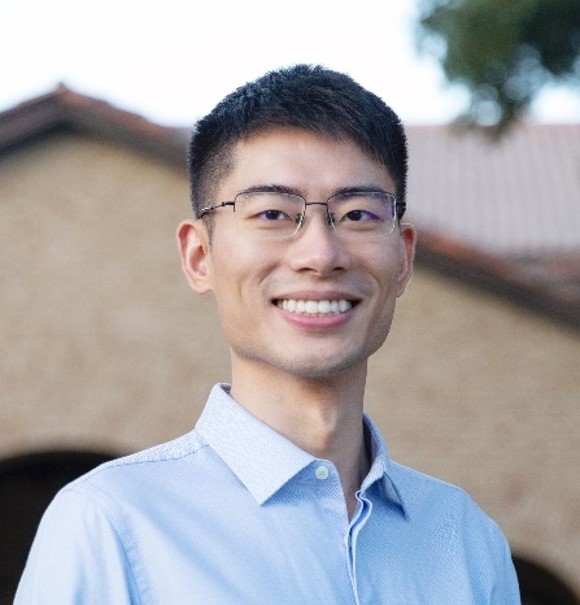
Reporter: Prof. Shao Yi
Time: 05/12/2025 (Monday), 09:00-11:00;
Location: Room 6580, Academic Building, HKUST
Host: Prof. Shenghan Zhang
Selected Essential Methods in Computational Solid Mechanics
Abstract
Computational Mechanics is an emerging interdisciplinary field that integrates mechanical theory, computer science, and numerical methods. Throughout its development, various methodologies have continuously evolved and converged, gradually forming two main branches: computational solid mechanics and computational fluid mechanics. This lecture focuses on computational solid mechanics methods. Drawing on the speaker’s research expertise and practical computational experience, it delves into representative methods and core technologies, including: Theoretical frameworks (conceptual deconstruction), Nonlinear solution strategies, Meshfree methods, and Physics-Informed Neural Networks (PINNs). By elucidating key concepts and practical techniques, the lecture aims to help participants systematically master the core methodologies of computational solid mechanics and enhance their ability to solve complex solid mechanics problems effectively.
Fundamental readings
It is expected that participants possess fundamental knowledge of the finite element method. As prerequisite reading, the following reference books are recommended:
Hughes TJR, 2000. The Finite Element Method: Linear Static and Dynamic Finite Element Analysis. Dover Publication Inc.
Bathe KJ, 2006. Finite Element Procedures. Prentice Hall.
Reporter: Prof. Xiaodan Ren
Time: 12/08/2025 (Tuesday), 09:00-10:45;
13/08/2025 (Wednesday), 09:00-10:45
Location: Room 2611, HKUST
Host: Prof. Shenghan Zhang
Introduction of reporter: Prof. Xiaodan Ren obtained his Ph.D. from Tongji University in 2011 and is currently Professor and Head of the Department of Structural Engineering at Tongji University’s College of Civil Engineering. With over two decades of expertise in stochastic damage mechanics and nonlinear structural analysis, he has authored >120 papers in international journals and was recognized among the top 2% of scientists worldwide (Stanford/Elsevier 2024). His honors include the Shanghai Excellent Doctoral Dissertation Award (2012), the ICACM Young Investigator Award (2018), and multiple Shanghai Science & Technology Achievement Awards (First Prize in 2019; Second Prizes in 2020 and 2023). Dr. Ren serves as Subject Editor for Structural Engineering at Engineering Failure Analysis, and holds leadership roles as Director of the Committee of Vibration Mechanics (Shanghai Society of Theoretical and Applied Mechanics), Council Member of the Association of Building Structures (Architecture Society of China), and Leader of Concrete Task Group of the Joint Committee on Structural Safety (JCSS).
Session 1: Excavation-Induced Settlement Effects on Structures
Session 2: SimCenter and Applications of SimCenter Tools
Session 3 and 4: Fiber Optic Sensing and Recent Applications
Session1 (14:00-14:45, Thu, 14/08/2025):
Abstract
Session 1 will start with a review of the basics of soil-structure interaction in the context of excavation-induced damage to structures. The session will then highlight experimental centrifuge testing research to understand this SSI problem and to evaluate simulation results. Finally, a new simulation tool will be presented that aims to efficiently enable uncertainty quantification in the prediction of structural damage due to excavation.
Session2 (15:00-15:45, Thu, 14/08/2025):
Abstract
Session 2 will provide an overview of software tools developed at SimCenter (https://simcenter.designsafe-ci.org/). SimCenter develops open-source software tools for natural hazards researchers. The goal is to accelerate research progress through building on the work of other researchers, and disseminating simulation research outputs in an open-source software environment. The session will also highlight case study uses of these tools.
Session 3 and 4 (15:00-15:45, 16:00-16:45, Fri, 15/08/2025)
Abstract
Workshop sessions 3 and 4 will discuss the use of fiber optics sensing (FOS) for experimental laboratory testing and structural health monitoring of civil infrastructure. Session 3 will start with an overview of FOS technology and will then focus on research that makes use of FOS for laboratory testing, with the aim of improving understanding of structural behavior. Session 4 will then discuss the application of FOS in several field monitoring projects, mostly focused on monitoring dynamic response.

Reporter: Prof. Matthew DeJong
Time: 14/08/2025 (Thursday), 14:00-15:45;
Location: Room 2611, HKUST
Host: Prof. Shenghan Zhang
Introduction of reporter: Prof Matthew DeJong is the Ray & Shirley Clough Presidential Chair in Structural Engineering at UC Berkeley, PI and Co-Director of the NHERI SimCenter (https://simcenter.designsafe-ci.org/), and Co-Director of the UC Berkeley Center for Smart Infrastructure (https://smartinfrastructure.berkeley.edu/). His research interests include earthquake engineering, infrastructure sensing and modeling, historic structures, and excavation-induced settlement of structures. He earned his BS from UC Davis and his MS and PhD from MIT. He served as a faculty member at Cambridge University (UK) for 9 years prior to his current appointment.
Uncertainty Quantification in Engineering
(1)Uncertainty and Its Characterization
Engineering systems commonly face multiple sources of uncertainty, including structural parameters (e.g., material properties, dimensions, boundary conditions) and environmental loads (e.g., seismic motion, strong winds, ocean waves). This course systematically introduces the fundamental concepts, research motivations, and modeling methods for uncertainty in engineering, emphasizing its critical role in balancing structural safety and cost-effectiveness. The course systematically covers uncertainty modeling and simulation at three levels: Single-variable modeling (parametric and non-parametric methods), Probabilistic dependence modeling between variables (correlation coefficients and copula functions), Spatiotemporal variability modeling (stochastic processes and random field theory). Additionally, commonly used sampling and simulation techniques are introduced. Designed for graduate students and early-career researchers, this course provides a theoretical foundation and practical methodologies for uncertainty quantification, equipping participants to effectively address uncertainty challenges in modeling, assessment, and optimization of complex structural systems.
(2)Uncertainty Propagation: Probability Density Evolution Theory
Under uncertain inputs, the response of engineering structures manifests as a stochastic process with time-evolving probability distributions. The Probability Density Evolution Theory, grounded in the principle of probability conservation, establishes governing equations for the probability density function of system responses, serving as a core theoretical framework for studying uncertainty propagation mechanisms. This course systematically introduces the theory and numerical methods of probability density propagation in structural systems, covering: The complete framework from random event description to state-space description, and the physical background, derivation, and solution methods of the generalized density evolution equation. Aimed at graduate students and researchers with foundational probability knowledge, the course helps participants master uncertainty propagation theory at the probability density level and its practical applications in dynamic response analysis and structural reliability assessment.
Extended readings
Gardiner CW, 2004. Handbook of Stochastic Methods. 3rd Edn. Springer-Verlag.
Hong HS., & Tang HZ. , 2016. Probabilistic Concepts in Engineering (Jianbing Chen et al., Trans.). China Architecture & Building Press. (Original work published in English)
Li J., & Chen JB, 2023. Stochastic Dynamics of Structures (Mengze Lyu, Trans.). Shanghai Scientific & Technical Publishers.
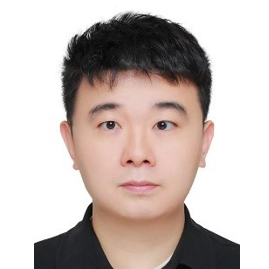
Reporter: Dr. Mengze Lyu
Time: 08/08/2025, 09:00-11:00
Location: Room 1527, HKUST
Introduction of reporter: Dr. Lyu’s investigations include the development of dimension-reduced probability density evolution equation (DR-PDEE) for probabilistic responses and reliability analysis of high-dimensional nonlinear stochastic dynamical systems, the analytical and numerical methods for the time-variant extreme value distribution of Markov processes, and the applications in structural seismic safety assessment and design optimization. Dr. Lyu has authored a translated book and published 27 peer-reviewed English journal papers, 2 Chinese journal papers, and 12 chapter /conference full papers, with a total of over 360 citations and a single-paper citation record exceeding 40 (Google Scholar H-index 11). He has been invited to deliver two plenary keynote speeches and four invited talks at international and domestic conferences. He has also been involved in organizing 14 mini-symposia of international conferences. Dr. Lyu serves as the deputy secretary-general of the Committee of Random Vibration of the CSVE since 2023, and was selected for Shanghai Postdoctoral Excellence Program in 2022.